This symposium will focus on the role of personality, especially narrative identity – the evolving story people construct to make sense of themselves and their lives.
The symposium is held in honour of the 2026 Nils Klim Laureate Majse Lind. The Laureate’s lecture is followed by presentations by invited guests, a panel discussion and a Q&A session.
This event is part of the 2026 Holberg Week, which takes place from 1 to 4 June, in Bergen.
Abstract
The speakers will highlight its central role in the development, maintenance, and severity of mental health problems. We will discuss how personality and narrative identity can serve as early markers of psychopathology, contribute to self-stigmatization, and offer clinical and preventive utility. Evidence will span across mental illnesses and settings, including family and outpatient contexts. Each speaker will share key lessons and milestones to guide future research and practice in addressing the ongoing mental health crisis.
Programme
Welcome
by Professor Bjørn Enge Bertelsen, Academic Director of the Holberg Prize
Introduction of the 2026 Nils Klim Laureate
by Per-Einar Binder, Professor in Clinical Psychology, University of Bergen
Lecture and introduction of the topic: ‘Storying the Person in a Mental Health Crisis’
by Nils Klim Laureate Majse Lind, Associate Professor of Clinical Psychology, Aalborg University
In this lecture the laureate will link the storied sense of self, the narrative identity, to the development, severity, and recovery of personality pathology.
‘A Qualitative Angle to Identity & Psychopathology‘
by Elisabeth de Moor, Assistant Professor of Developmental Psychology, Tilburg University.
Much of past work on identity and psychopathology has examined directional effects, such as how identity problems affect psychopathology presence and development. We may additionally question how youth make subjective meaning out of their psychopathology – i.e., how they relate their psychopathology to their sense of identity. In my talk, I describe how a qualitative approach that focuses on the stories that youth tell of themselves and their lives may provide new insights into the entwinement of identity and psychopathology. I illustrate the advantages of such an approach with findings from interviews and focus groups with youth with internalizing and borderline personality pathology.
‘Narrative Identity in Crises and Recovery‘
by Rikke Jensen, Assistant Professor at the Centre for Involvement of Relatives and the University of Southern Denmark
Mental health crises disrupt not only individual self-understandings but the shared narrative worlds in which storytelling and meaning-making take place. To examine this, I draw on different empirical contexts and explore narrative identity in crisis and recovery as a relational and communicative process. I show how these processes are shaped by unequal conditions for being heard within institutional and social contexts, revealing how vulnerability and responsibility are unevenly distributed. This has broader societal implications for how we understand narrative identity and recovery and calls attention to the conditions that determine whose voices are heard and whose remain marginal.
‘The Narrative Self in Psychopathology‘
by Annabel Bogaerts, Assistant Professor in Clinical Developmental Psychology, University of Amsterdam
Personality is a robust predictor of psychological well-being and mental disorder, cutting across diagnostic boundaries through traits and dimensions such as neuroticism and identity disturbance. Yet these frameworks reveal vulnerabilities without capturing lived experience. This talk argues for the clinical and scientific necessity of narrative identity. From a lifespan perspective, I review key findings on personality and psychopathology before turning to narrative identity as a underutilized dimension of personality. Special attention is given to emerging adulthood, when forming a stable identity and meaningful relationships render the storied self particularly vulnerable and important.
Commentary
by Nils Klim Laureate Majse Lind
Panel discussion and Q&A
moderated by Per-Einar Binder, Professor in Clinical Psychology, University of Bergen
Closing remarks
by Per-Einar Binder, Professor in Clinical Psychology, University of Bergen
Speakers
Majse Lind
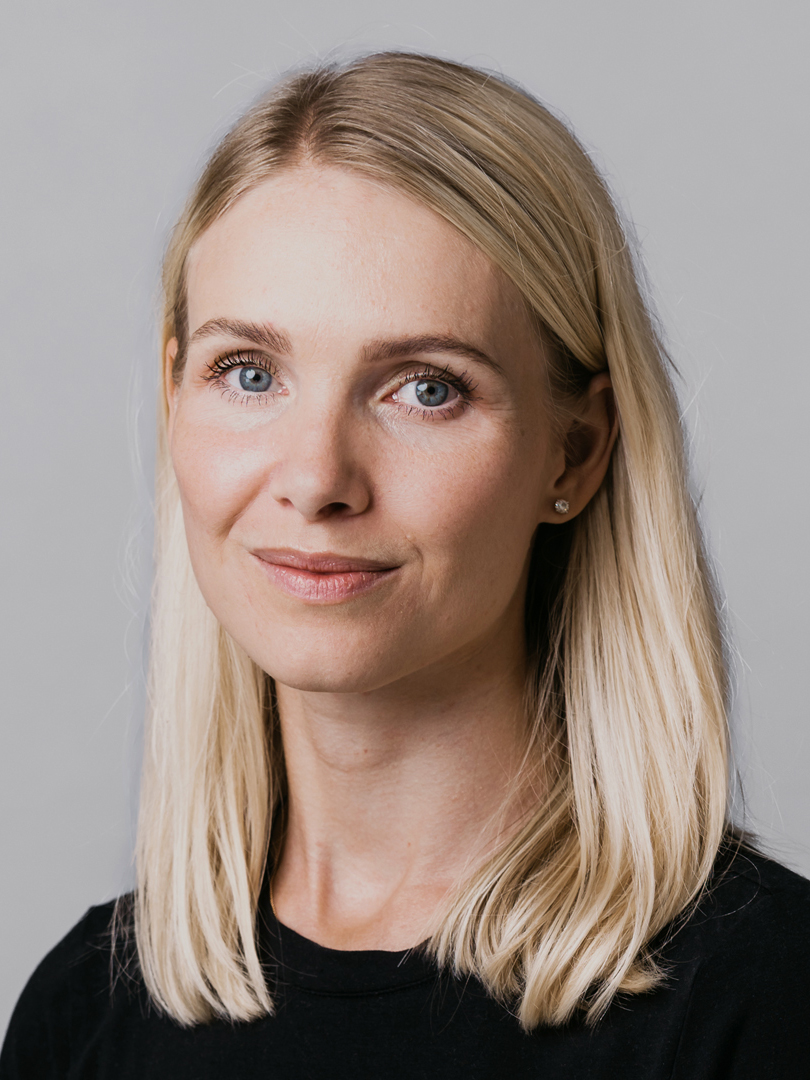
Photo: Sara Mee Joo
Majse Lind is Associate Professor of Psychology at Aalborg University in Denmark. She received her PhD from Aarhus University and has also held postdoctoral positions at Northeastern University and at the University of Florida, USA. Her research examines identity at the intersection of personality development and personality pathology, with a particular focus on narrative identity. Lind leads the IN:DEPTH Lab and is Co-Director of the AI:MIND Lab, where artificial intelligence is used to identify early markers of personality pathology. She is also President-Elect of the International Society for the Study of Personality Disorders (ISSPD), has received several awards for her work, and has published widely in leading international journals.
Elisabeth de Moor
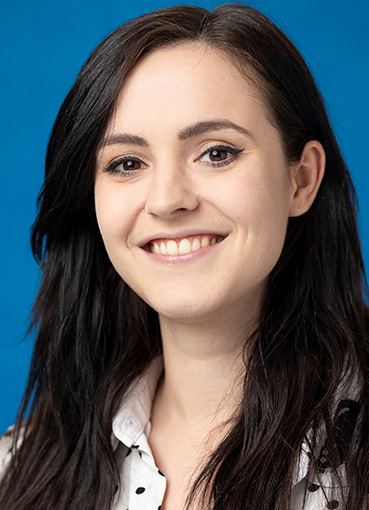
Elisabeth de Moor is Assistant Professor at the Department of Developmental Psychology at Tilburg University. Her research focuses on the interplay between identity and psychopathology in youth. She is also co-host of the Personality Psychology Podcast.
Rikke Amalie Agergaard Jensen

Rikke Jensen, psychologist and PhD, is Assistant Professor at the Centre for Involvement of Relatives and the University of Southern Denmark. Her research focuses on narrative identity, personal recovery, and the role of family relationships in mental health, with particular attention to how meaning, responsibility, and voice are negotiated across patients, caregivers, and children.
Annabel Bogaerts
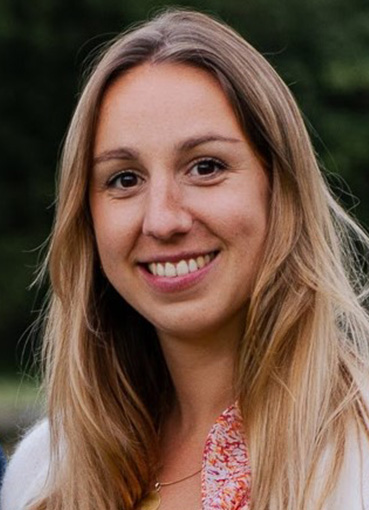
Annabel Bogaerts is Assistant Professor in Clinical Developmental Psychology at the University of Amsterdam and a clinician in the psychodynamic child therapy team at PraxisP in Leuven. Her research focuses on the self, (narrative) identity, and how disruptions in these domains relate to personality- and body-related psychopathology. More recently, she explores the experience of inner emptiness, a clinically relevant yet underexplored phenomenon at the intersection of identity and suffering. Helping children and adolescents find, recover or rewrite their narrative is, for Annabel, both the means and goal of therapy.
Per-Einar Binder (Moderator)

Per-Einar Binder is Professor in Clinical Psychology at the University of Bergen. He has been working at the Department of Clinical Psychology since 2003, where he became a full professor in 2007. He has specialized in psychodynamic and emotion-focused psychotherapy and mindfulness-based approaches. His research includes studies of narrative identity, mindfulness-based interventions, other personal and existential change processes, theoretical psychology, and the development of qualitative research methodologies.