
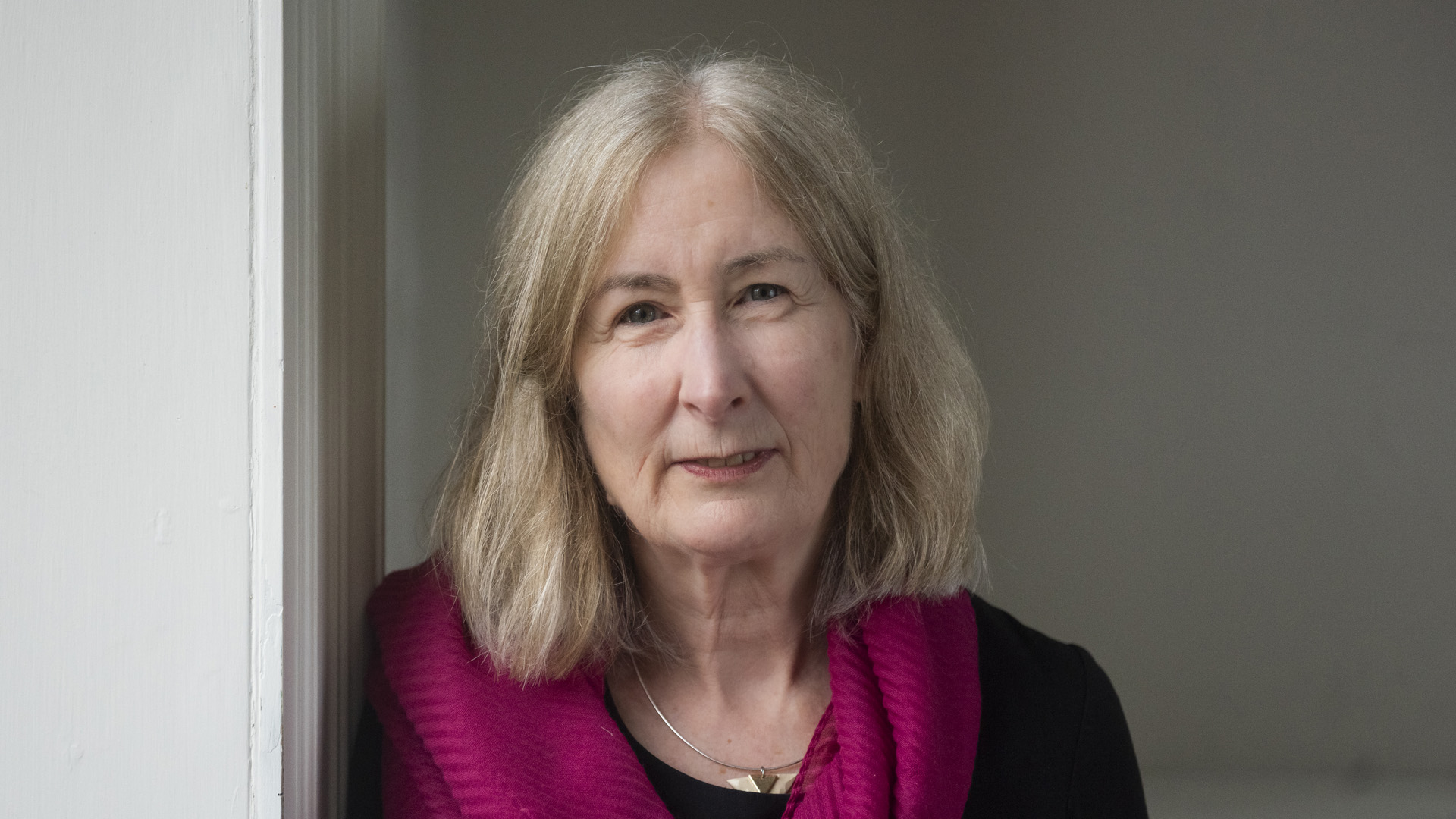
The 2026 Holberg Prize is awarded to Australian scholar Lyndal Roper for her pioneering work on early modern European history.
The Holberg Committee Citation
Lyndal Roper is one of the foremost scholars of early modern Europe and an outstandingly original historian. Born in Melbourne, Australia in 1956, Professor Lyndal Roper was the first woman, and the first Australian, appointed to the Regius Chair of History at the University of Oxford, United Kingdom. After studying at the Universities of Melbourne and Tübingen, Germany, she gained a PhD in History from King’s College London and worked at Royal Holloway, University of London. She is an elected fellow of several national academies, including the Berlin-Brandenburg Academy of Sciences and Humanities.
Roper is one of the pioneers of cultural and social history research in three areas: the witch hunts of the Reformation era, the Peasants’ War and previously unexplored aspects of Martin Luther’s biography. Her work is pathbreaking in its combining of gender, embodiment and psychosocial history. Roper’s witty, vibrant and evocative writing style is both empirically rigorous and theoretically sophisticated. It speaks to a broad, international, interdisciplinary readership and resonates with the contemporary context.
Roper’s numerous publications include the 1989 Holy Household, examining the effects of the Reformation on gender relations and the scope for action open to women in a 16th-century imperial city. Her publications on witches, including Witch Craze: Terror and Fantasy in Baroque Germany (2004) and The Witch in Western Imagination (2012), have shifted popular understandings. Roper shows that witches were central to the ways in which early modern society imagined itself, so studying them illuminates societal beliefs, fears and hopes.
Her biographical work, including the 2012 Der feiste Doktor and Martin Luther: Renegade and Prophet (2016), is equally transformative. Roper’s examination of Luther’s use of vulgar language, as well as his verbal pugilism, rampant anti-Semitism, physicality and self-presentation, helps to explain his theology in new ways. Her most recent book, Summer of Fire and Blood: The German Peasants’ War won the 2025 Cundill History Prize.
Roper’s psychohistorical approach challenges previously established assumptions about early Modernity. Her analysis of both the body and the psyche of historical actors has influenced the broad discipline of history and historical methodology. In recognition of her inspiring, dynamic teaching and generous support of graduate students and early career researchers, the Faculty of History have established the Regius Prize for the best piece of historical research by an early career or fixed-term researcher at the University of Oxford. She is internationally celebrated for her ability to communicate historical findings to expert and broader audiences.
Lyndal Roper is a highly worthy recipient of the 2026 Holberg Prize.
On behalf of the Holberg Committee,
Ann Phoenix, Committee Chair
The 2026 Holberg Prize
University of Oxford
Australia / United Kingdom
Biography
Lyndal Roper (b. 1956) is a historian of early modern Europe. She grew up in Australia and did her first degree at the University of Melbourne, then went to Germany, studied at the University of Tübingen, and completed her doctorate at King’s College London, where she joined the London Feminist History Group. She has worked at King’s College London, Royal Holloway, University of London, where she set up the Bedford Centre for Women’s History with Amanda Vickery in 1999, and Balliol College Oxford. In 2011 she became Regius Professor of History at Oxford, the first woman to hold the 300 year old post.
Since girlhood in Australia she has been fascinated by German history, and she has written on women and the Reformation, witchcraft, and sexuality in the sixteenth century. In 2016 she published a biography of the reformer Martin Luther and last year her history of the German Peasants’ War of 1524-26 appeared, Summer of Fire and Blood, which won the Cundill Prize. To write this book, she cycled or walked almost all the areas it took place, cycling over 600 km from Strasbourg to Konstanz.
Now she runs experimental workshops, ‘Moving History’, teaching critical and creative thinking in combination with physical exercise. She co-edited the journal Past & Present for over a decade and has been a member of History Workshop Journal collective for forty years. She has been involved in many campaigns around issues of women/gender and equality generally, and helped establish two Chairs at the University of Oxford in Women’s History and in the History of Sexuality.
Interview
External Links
Related content

Announcement of the 2026 Holberg Prize and Nils Klim Prize
On Tuesday, 17 March, the 2026 Holberg Prize and Nils Klim Prize will be announced at the University Aula in…
The 2026 Holberg Week
Join us in celebration of outstanding research in the humanities, social sciences, law and theology. The 2026 Holberg Week takes…

Press Room
Press room for the Holberg Prize and the Nils Klim Prize. Here you will find the latest press releases, photos and biographies for the laureates.