

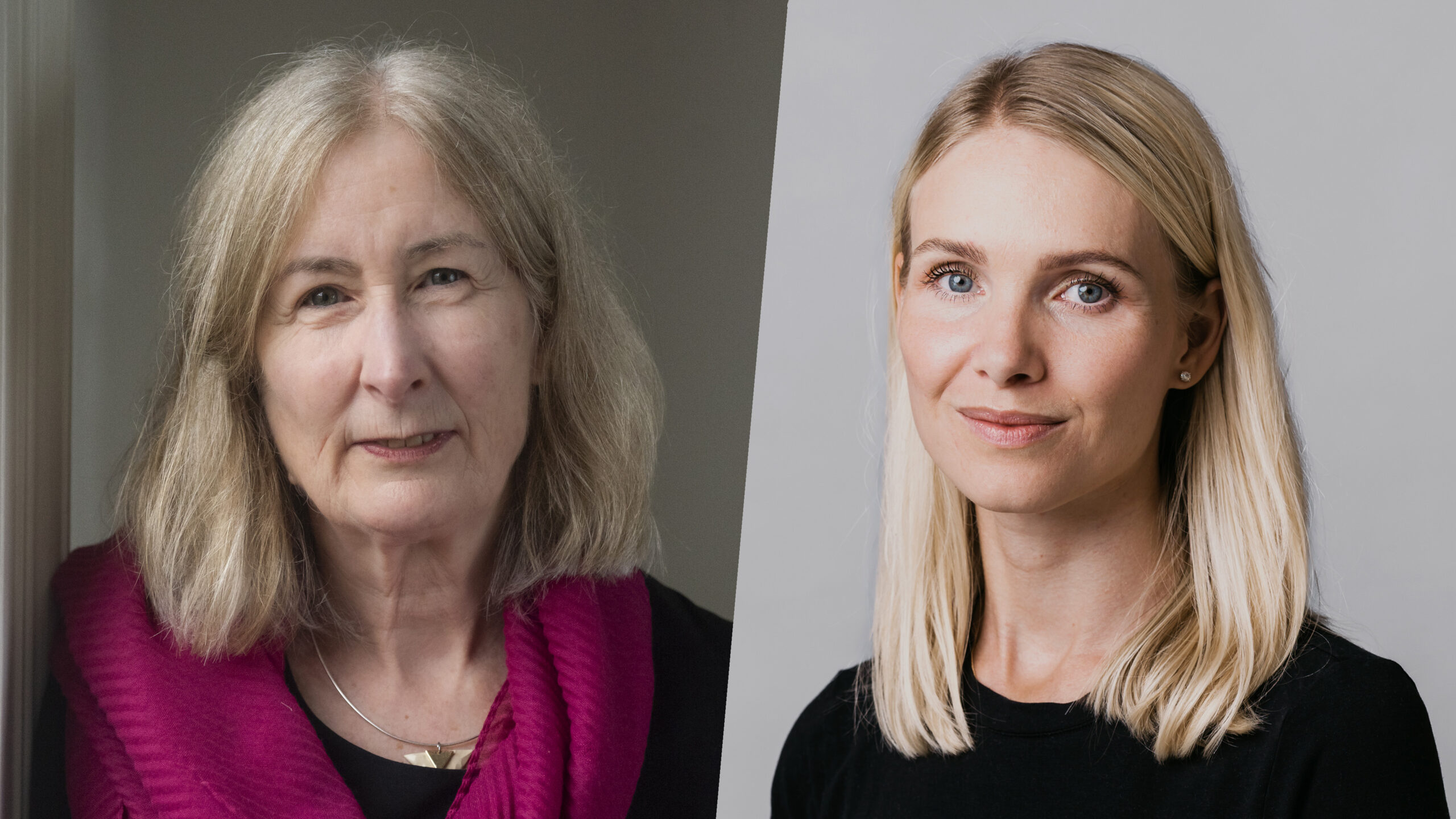
It was announced today that the 2026 Holberg Prize is awarded to the Australian British historian Lyndal Roper for her groundbreaking research. Majse Lind of Denmark is awarded the Nils Klim Prize.
Today, the Holberg Prize—one of the largest international prizes awarded annually to an outstanding researcher in the humanities, social sciences, law or theology—named Australian scholar Lyndal Roper as its 2026 Laureate.
Roper is the Regius Chair of History at the University of Oxford emeritus. She will receive the award of NOK 6,000,000 (approx. GBP 466,00 / USD 630,000) during a 4th June ceremony at the University of Bergen, Norway.
Research on Witches, Power, and the Human Mind
Professor Roper is internationally recognized as one of the leading scholars of early modern European history. Her pioneering studies have reshaped understandings of witch persecutions, the German Peasants’ War (1524–1525), and the life and thought of Martin Luther, illuminating how gender, the body, psyche and power operated in social and religious conflicts of the sixteenth century. Roper’s work is widely renowned for its methodological innovativeness and capacity to cut across disciplinary boundaries.
New Perspectives on the Body, Sexuality, and the Psyche
One of Roper’s major works is Oedipus and the Devil (1994), which offers a new understanding of gender and culture by emphasizing that body and psyche cannot be separated from historical experience.
The book explores the psychological forces at the intersection of the body, magic, religion and sexuality, and examines masculinity, brutality and notions of honour in early modern Europe. Roper shows how masculinity could function as a political instrument in the sixteenth century, and how violence, drinking, sexual behaviour and social discipline helped shape Protestant identity.
How Fantasies were Transformed into Evidence
In Witch Craze: Terror and Fantasy in Baroque Germany (2004), Roper analyses hundreds of trial records from southern Germany, demonstrating that witch persecutions and other aspects of the Reformation era cannot be understood without attention to emotions, desire and fear.
She shows how ideas about motherhood, ageing and fertility underpinned accusations of witchcraft, and explains why confessions were extracted and appeared convincing to contemporary judges. The book also illustrates how these images continue to influence cultural understandings of “the witch.” It was awarded the Roland H. Bainton Prize in 2005.
Bringing the Reformer’s human side to light
Roper’s research likewise provides a new perspective on Martin Luther, the most iconic figure of the Reformation. She shows how Luther’s language, self‑presentation, bodily experience and emotional expression shaped both his theology and his public leadership.
In works such as Der feiste Doktor (2012), Martin Luther: Renegade and Prophet (2016), and Living I Was Your Plague: Martin Luther’s World and Legacy (2021), Roper examines how everything from his use of coarse language to his projection of authority contributed to the political and religious upheavals of the sixteenth century. Luther thus emerges not only as a reformer, but as a historical individual shaped by the conflicts, cultural assumptions and psychological tensions of his time.
When the Peasants Rose Up
Roper’s latest major study, Summer of Fire and Blood: The German Peasants’ War (2025), was awarded the Cundill History Prize in 2025. The book is the first major English-language account of the Peasants’ War—the largest popular uprising in Europe before the French Revolution—in over a generation.
This work offers a vivid reconstruction of the social tensions, religious ferment and political violence that fuelled one of the most consequential popular uprisings of the early modern period, while also illuminating the lived experiences of individuals caught up in the conflict. Other central works by Roper include The Holy Household: Women and Morals in Reformation Augsburg (1989) and The Witch in the Western Imagination (2012).
Focussing of Forgotten Voices
Describing the key purpose of her work, the Laureate says: “Over the course of my career, I’ve been trying to do history from below, that is, I wanted a history that would include the voices of ordinary people, of all kinds, colours and classes, and of women in particular. I wanted new historical narratives that were not about great men and giant events.”
“Here I think my experience of being a mother made me realise how important what can’t be put Into words is, and how communication doesn’t always need language,” she continues. “And I wanted gender to be front and centre of the kind of history we write. I wanted to bring people’s bodily experiences into history, and I wanted to think about people’s unconscious motivations too.”
A Highly Deserving Prize Recipient
In a statement, the Holberg Committee Chair, Professor Ann Phoenix said: “Lyndal Roper is one of the foremost scholars of early modern Europe and an outstandingly original historian. “Her research challenges previously established assumptions about early Modernity,” she continued. “Professor Roper is a highly worthy recipient of the 2026 Holberg Prize.”
The Head of the Humanities Division at the University of Oxford, Professor Dan Grimley, offered his congratulations: “I am delighted that our Regius Chair of History, Professor Lyndal Roper, has been awarded the prestigious Holberg Prize,” said Professor Grimley. “The Prize is awarded to someone who has made a ‘decisive influence on international research’, and I cannot imagine a more deserving recipient than Professor Roper. Her research and publications have made a major contribution to our understanding of Martin Luther; the history of witchcraft; 16th-century German art; gender history; and more. Students and early career researchers in our History Faculty have benefited from her teaching and support over the years, and we are thrilled by the recognition that this award bestows.”
The Head of the Humanities Division at the University of Oxford, Professor Dan Grimley, also offered his congratulations: “I am delighted that our Regius Chair of History, Professor Lyndal Roper, has been awarded the prestigious Holberg Prize,” said Professor Grimley. “The Prize is awarded to someone who has made a ‘decisive influence on international research’, and I cannot imagine a more deserving recipient than Professor Roper. Her research and publications have made a major contribution to our understanding of Martin Luther; the history of witchcraft; 16th-century German art; gender history; and more. Students and early career researchers in our History Faculty have benefited from her teaching and support over the years, and we are thrilled by the recognition that this award bestows.”
Nils Klim Prize to Danish Psychology Researcher
The recipient of the Nils Klim Prize was also announced today. This prize, worth NOK 500,000, is awarded annually to a younger scholar from or working in the Nordic countries who has excelled in the fields covered by the Holberg Prize. The Nils Klim Prize and the Holberg Prize will be conferred during the same ceremony on 4 June.
The 2026 Nils Klim Prize is awarded to the Danish psychologist Majse Lind. She is Associate Professor of Clinical Psychology at the Department of Culture and Communication, Faculty of Social Sciences and Humanities, Aalborg University. Lind receives the prize for her interdisciplinary research on mental health, with particular focus on disorders among young people and older adults. Her work examines, among other things, how the stories people tell about themselves can be used to identify and treat psychological challenges such as personality disorders and identity‑related problems.
AI as a Mental Health Tool
Lind’s research also includes groundbreaking work with artificial intelligence aimed at detecting early signs of identity difficulties. She has published more than 50 scientific articles and is Co‑Director of the interdisciplinary initiative AI:MIND at Aalborg University, which seeks to promote young people’s mental health through conversational AI.
“Being recognized for my research, as with the Nils Klim Prize, feels deeply rewarding,” Lind says. “As a young researcher, much of the work happens quietly—driven by curiosity, commitment, and long-term belief in the importance of the questions one asks. To have that work acknowledged in this way is incredibly affirming.”
The Chair of the Nils Klim Committee, Professor Andreas Føllesdal, states that Majse Lind is “a most worthy recipient of the Nils Klim Prize for her outstanding, original, innovative and interdisciplinary contributions to psychological research on topics of the utmost importance.”
The Norwegian Government Offers Congratulations
The Norwegian Government also extends its congratulations. “On behalf of the Norwegian Government, I would like to congratulate Professor Lyndal Roper on receiving the 2026 Holberg Prize, says Minister of Research and Higher Education Sigrun Aasland.”
“Her research offers new perspectives on European history and shows how ideas and beliefs from the past continue to shape us today. Roper’s work demonstrates why the humanities are essential for understanding the society we live in.”
Last edited:
Published:
Related content

Lyndal Roper
The 2026 Holberg Prize is awarded to Australian scholar Lyndal Roper for her pioneering work on early modern European history.

Majse Lind
The 2026 Nils Klim Prize is awarded to the Danish psychologist Majse Lind for her interdisciplinary research on mental health.

Announcement of the 2026 Holberg Prize and Nils Klim Prize
On Tuesday, 17 March, the 2026 Holberg Prize and Nils Klim Prize will be announced at the University Aula in…