

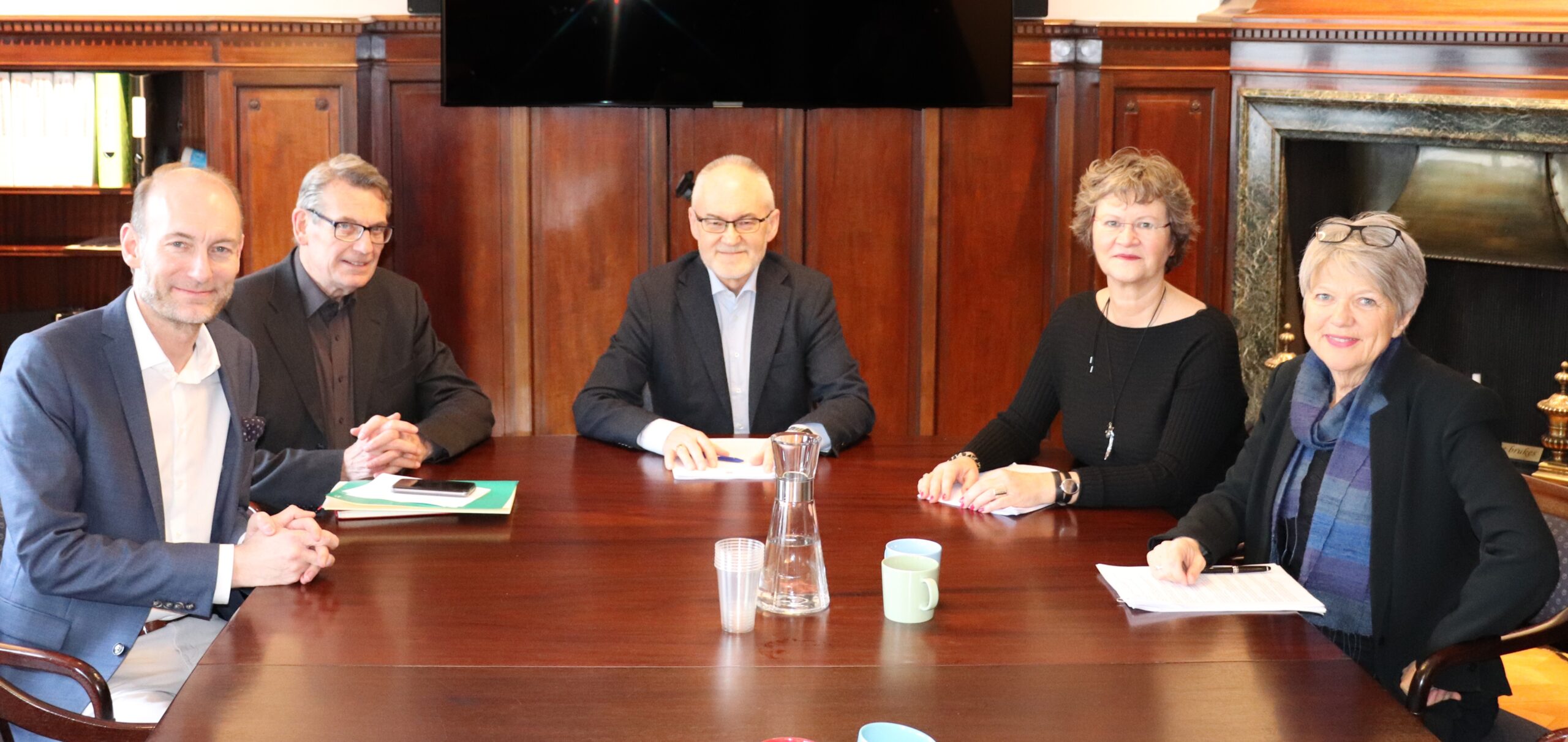
On 13 February the Holberg Board decided that the prize amount would increase from NOK 4.5 million to NOK 6 million (USD 760,000). The increase is effective this year.
Established by the Norwegian Parliament in 2003, the Holberg Prize is awarded to scholars who have made outstanding contributions to research in the arts and humanities, social science, law or theology. The Prize is funded by the Norwegian Government through a direct allocation from the Ministry of Education and Research to the University of Bergen. Previous winners include Julia Kristeva, Jürgen Habermas, Manuel Castells, Bruno Latour, Onora O’Neill and Stephen Greenblatt.
“It is with great pleasure we now increase the monetary value of the Holberg Prize,” says Chair of the Holberg Board Sigmund Grønmo. “The Prize has been worth NOK 4.5 million since it was established in 2003. Now, the prize amount is increased to the same level as the Abel Prize in mathematics, and the Holberg Prize strengthens its position as one of the world’s largest annual research prizes in the humanities, social sciences, law and theology.”
It was also decided to increase the value of the Nils Klim Prize to NOK 500,000 (USD 64,000). The Nils Klim Prize covers the same academic fields as the Holberg Prize and is awarded annually to a Nordic researcher under the age of 35.
Yesterday, the Holberg Board also selected the recipients of the 2018 Holberg Prize and Nils Klim Prize, respectively. The decision will be announced on 14 March, during a ceremony at the University Library of the Humanities, University of Bergen. The event will be livestreamed on the Holberg Prize website: holbergprize.com.
The Holberg Prize and the Nils Klim Prize 2018 will be formally conferred during a ceremony at the University of Bergen on 6 June. The deadline for nominations for the 2019 prizes is 15 June.
Last edited:
Published:
Related content
“Everyone dreams at night”: Interview with Stephen Greenblatt
What are the paths and life events that have led 2016 Holberg Laureate Professor Stephen Greenblatt to where he is today? Where will he go from here? How will the humanities survive the current crisis? Those are some of the questions Greenblatt answers in this exclusive interview.
About Fredric R. Jameson
Fredric R. Jameson (born in 1934 in Cleveland, Ohio) is one of today's most important and most influential cultural theorists. He has done more for the contextual study of culture than any other living scholar. Over the past four decades, he has developed a richly nuanced theory of how modern culture – in particular, literature, painting, cinema, and architecture – relates to social and economic developments.

About Ian Hacking
Ian Hacking (born in 1936 in Vancouver, British Columbia) is one of the world's leading scholars in the fields of philosophy and history of science. He has made important contributions to areas as diverse as the philosophy and history of physics; the understanding of the concept of probability; the philosophy of language; and the philosophy and history of psychology and psychiatry.