


The Holberg Prize is an international research prize in the humanities, social sciences, law and theology. The nomination form for the 2022 Holberg Prize is now open and the deadline is 15 June 2021.
Each year, the Holberg Prize is awarded to a scholar who has made outstanding contributions to research in the humanities, social sciences, law or theology, either in one of these disciplines or through cross-disciplinary work. The recipient must have had a decisive influence on international research.
Nomination Requirements
Scholars holding positions at universities, academies and other research institutions, are entitled to nominate candidates for the Holberg Prize. Please note that all text and attachments must be written in English. In the nomination, form we ask that you provide the following:
- A statement of 1000-3000 characters (incl. spaces), explaining why the candidate should receive the Holberg Prize.
- The candidate’s CV and publication list.
- Names of three possible referees who know the candidate´s work and who can provide additional information if needed.
Please also note the following restrictions:
- Groups or organisations may not be nominated.
- Self-nominations and post-humous nominations are not accepted.
- Joint nominations do not strengthen a candidacy.
- Nominations are strictly confidential and should not be disclosed to the nominee or to others at any time.
Nomination form
The deadline for nominations for the 2022 Holberg Prize is 15 June 2021. The nomination form is submitted digitally and the form can be found here: Nomination form for the 2022 Holberg Prize.
The Holberg Laureate will be announced in March 2022, and the award ceremony will take place during the Holberg Week in Bergen in early June.
Last edited:
Published:
Related content

“Everyone dreams at night”: Interview with Stephen Greenblatt
What are the paths and life events that have led 2016 Holberg Laureate Professor Stephen Greenblatt to where he is today? Where will he go from here? How will the humanities survive the current crisis? Those are some of the questions Greenblatt answers in this exclusive interview.
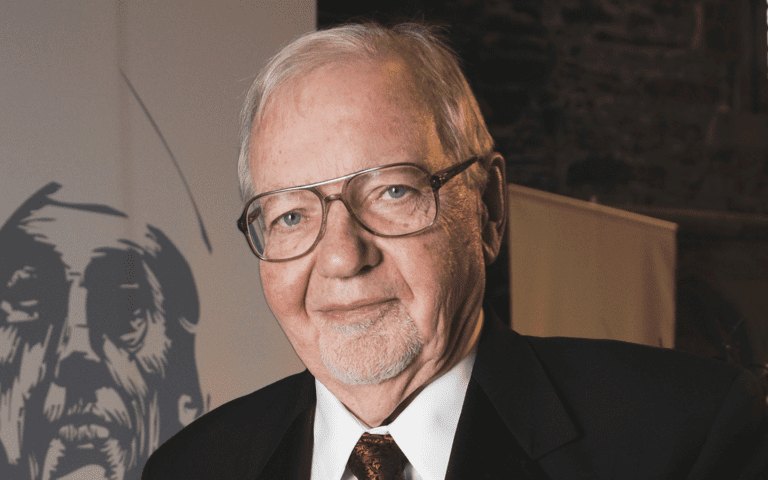
About Fredric R. Jameson
Fredric R. Jameson (born in 1934 in Cleveland, Ohio) is one of today's most important and most influential cultural theorists. He has done more for the contextual study of culture than any other living scholar. Over the past four decades, he has developed a richly nuanced theory of how modern culture – in particular, literature, painting, cinema, and architecture – relates to social and economic developments.

About Ian Hacking
Ian Hacking (born in 1936 in Vancouver, British Columbia) is one of the world's leading scholars in the fields of philosophy and history of science. He has made important contributions to areas as diverse as the philosophy and history of physics; the understanding of the concept of probability; the philosophy of language; and the philosophy and history of psychology and psychiatry.