

The Holberg Committee is responsible for the scholarly assessment of the nominations for the Holberg Prize.
The Holberg Committee consists of five internationally renowned scholars in the academic fields covered by the Holberg Prize: the humanities, social sciences, law and theology. The Committee is appointed by the board of the Holberg Prize and is responsible for the scholarly assessment of the nominations for the Holberg Prize.
Holberg Committee Members

Ann Phoenix (Chair)

Ryan Nefdt

Sari Hanafi
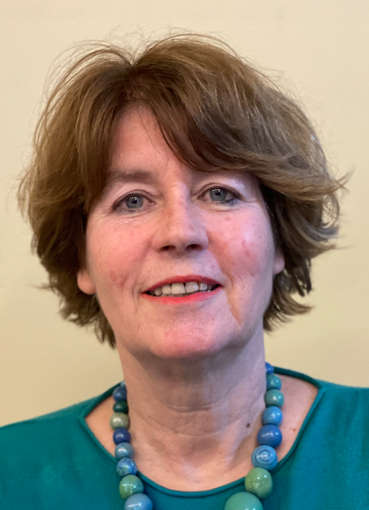
Birgit Meyer
Verica Trstenjak
The Holberg Committee’s Work
The Holberg Committee meets twice a year as part of the selection process for the Holberg Prize laureate. The first meeting takes place in mid autumn. At this meeting, the Committee reviews the nominations received and agrees on a shortlist of candidates for further consideration.
As part of the subsequent selection process, independent peer reviews are commissioned for all shortlisted candidates to supplement the information provided in the nomination letters. In most cases, four peer reviews are obtained for each shortlisted candidate. These assessments are written by scholars with extensive expertise in the candidates’ fields of research and academic work. The peer review reports, together with a summary of the reviews and all nomination documents, are made available to the Committee for its further deliberations.
The Committee’s second meeting is normally held in January/February. At this meeting, the shortlisted candidates are assessed in greater depth, and the Committee prepares its final recommendation for who should receive that year’s Holberg Prize.
The Holberg Prize Board selects the laureate based on the recommendation of the Holberg Committee. The recipient of the Prize is announced to the public in early March each year.

Members from the Holberg Prize Secretariat are often present during the Holberg Committee’s meetings, but do not take part in the discussions or selection process of the recipient of the Holberg Prize.
Appointment of Committee Members
Members of the Holberg Committee are chosen by the Board of the Holberg Prize. Committee members are elected for an initial period of three years, with the possibility of reappointment for one additional period.
A procedure is established in which the Holberg Prize Secretariat invites academies ad leading research institutions internationally to nominate potential committee members. In addition to scholarly and institutional achievements, variation in geography and academic fields are also important criteria for the selection process of new members.
Previous Committee Members
- Heike Krieger (2021-2026)
- Ram-Prasad Chakravarthi
- Susana Narotzky
- Delia Baldassarri
- Luke Bretherton
- David Nirenberg (2020-2025)
- Jean Grondin (2021-2024)
- Cui Zhiyuan (2018-2024)
- Graeme Turner (2015-2021)
- Mary Beard (2015-2021)
- Björn Wittrock (2014-2020)
- Dame Hazel Genn (2014-2020)
- Pratap Bhanu Mehta (2012 – 2018)
- Mary Jacobus (2009 – 2015)
- Etan Kohlberg (2013 – 2015)
- Helga Nowotny (2008 – 2014)
- Kwame Anthony Appiah (2008 – 2014)
- Christoph Markschies (2011 – 2013)
- Lars Björne (2009-2012)
- Henning Koch (2004 – 2009)
- Toril Moi (2004 – 2009)
- Turid Karlsen Seim (2004 – 2009)
- Stein Kuhnle (2004 – 2007)
- Johan P. Olsen (2004 – 2006)