

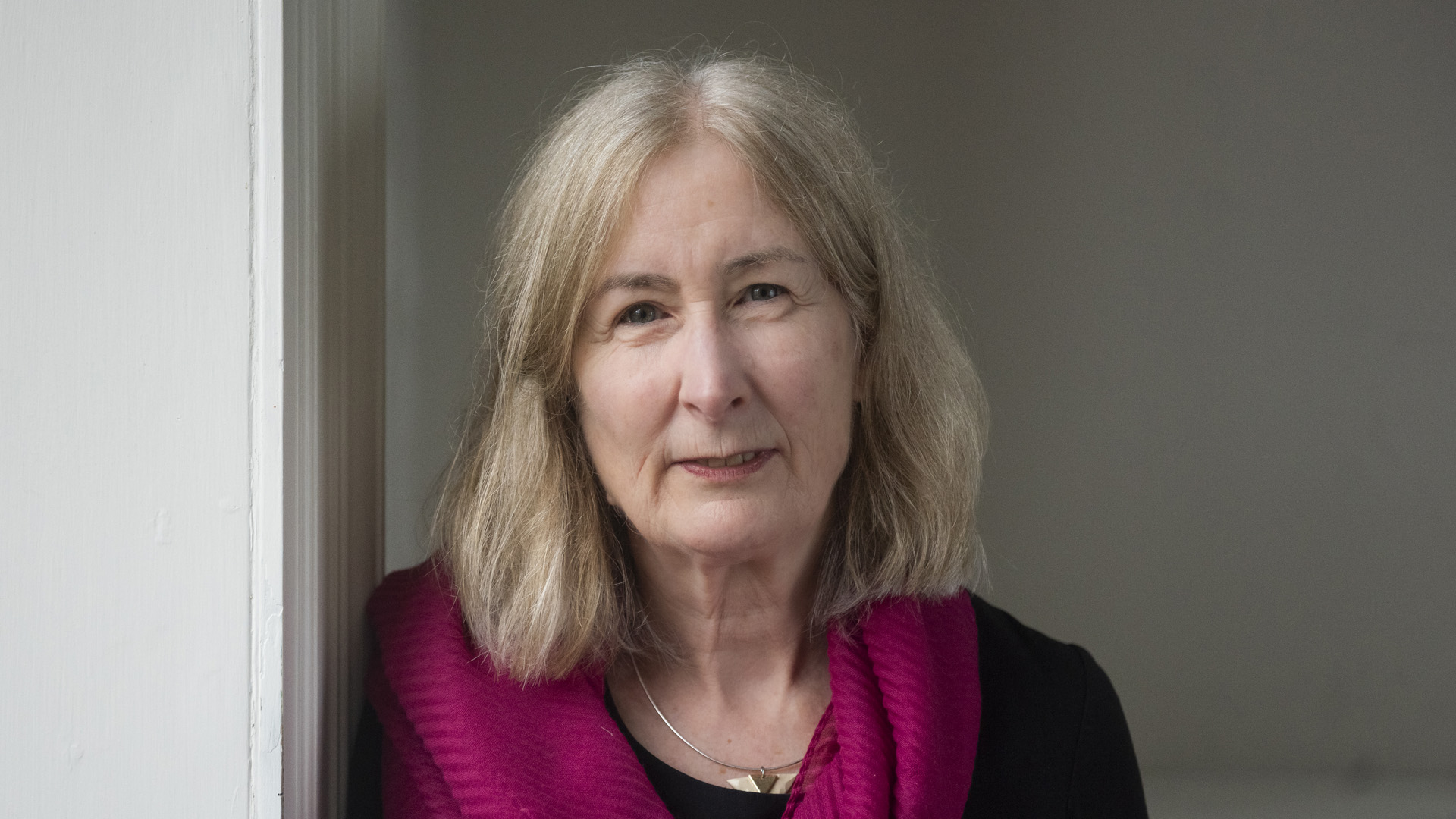
The Holberg Prize is offering scholarships for five PhD candidates in the Nordic countries to participate in a Masterclass with Professor Lyndal Roper on ‘Bodies, Gender, Psyche, Movement’ on 3 June, 2026.
PhD candidates in the Nordic countries can now apply to participate in a Masterclass with Professor Lyndal Roper, the 2026 Holberg Laureate. The event takes place during the Holberg Week in Bergen, on Wednesday, 3 June, 2026, 10:00–12:00.
The deadline for applications is 17 April, 2026.
Travel and accommodation expenses will be covered, and the participants are also invited to other events during the Holberg Week (1–4 June).
Participation in the Masterclass will earn you five ECTS credits. We invite applicants form all disciplines relevant to the fields covered by the Holberg Prize: humanities, social sciences, law and theology.
‘Bodies, Gender, Psyche, Movement’
How do we include physical experience, real bodies, in our understanding of human life? Where do phenomena like dreams fit in? What does gender mean today?
How do we get beyond discourse about ‘the body’ – after all, there is no such thing as THE body – and what opens up if we no longer assume gender is binary? AI of course doesn’t have a body. How can we enrich our account of human agency by thinking about emotions, including religious ones, and the unconscious? And how does our thinking change when we move?
Format and preparation
Drawing also on their own work, participants are asked to prepare a five-minute presentation related to the main topic of the Masterclass. In addition to knowledge of the texts in a curriculum chosen by the Laureate, participants are also asked to prepare questions for Professor Lyndal Roper in advance.
The discussion will be held in English. Please note that PhD Masterclass is open to the public and will be livestreamed. Video will remain online after the event.
Curriculum
- Roper, Lyndal. 1994. “Introduction”. In Oedipus and the Devil: Witchcraft, religion and sexuality in early modern Europe. London: Taylor & Francis, pp. 1-35.
- Roper, Lyndal. 2010. “Martin Luther’s body: the ‘stout doctor’ and his biographers”, The American Historical Review 115(2): 351-384.
- Roper, Lyndal. 2021. “Emotions and the German Peasants’ War of 1524–6”, History Workshop Journal 92: 51-81.
- Roper, Lyndal. 2021. “Luther the Antisemite” OR “Luther and Dreams”. In Living I was your plague. Martin Luther’s World and Legacy. Princeton, NJ: Princeton University Press.
- Roper, Lyndal. 2025. “Turbulence and the German Peasants’ War of 1524–6”, History Workshop Journal, 100(1): 134-152. With this article, please also read this companion article: https://www.historyworkshop.org.uk/war-military/writing-the-german-peasants-war/
- Roper, Lyndal and Andreas Hamburger. Forthcoming 2026. “Climbing the Kiliansturm. A methodological dialogue between historiography and psychoanalysis on searching for the traces of the historical trauma of the German Peasants’ War”. In History and Psychoanalysis. Interdisciplinary Dialogues, ed. Karl Figlio and
Anthony Kauders. Routledge.
How to apply
Apply for the Masterclass by completing the application form below. We ask that you submit a letter of motivation (no more than 3,500 characters), your CV and contact information. The deadline for applications is 17 April, 2026.
Decisions to all applicants about course admittance will be given by 2 May 2026.
Participants will be selected by the pool of applicants by Academic Director of the Holberg Prize, prof. Bjørn Enge Bertelsen, in collaboration with the Secretariat.
If you have any questions about the event, application requirements or practicalities, please contact the Holberg Prize Secretariat at info@holbergprisen.no.
Related content
Last edited:
Published:
About Lyndal Roper
2026 Holberg Laureate Lyndal Roper is the Regius Chair of History Emeritus at the University of Oxford.
Roper is internationally recognized as one of the leading scholars of early modern European history. Ropers pioneering studies have reshaped understandings of witch persecutions, the German Peasants’ War (1524–1525), and the life and thought of Martin Luther, illuminating how gender, the body, psyche and power operated in social and religious conflicts of the sixteenth century. Roper’s work is widely renowned for its methodological innovativeness and capacity to cut across disciplinary boundaries.

Lyndal Roper
The 2026 Holberg Prize is awarded to Australian scholar Lyndal Roper for her pioneering work on early modern European history.
The 2026 Holberg Week
Join us in celebration of outstanding research in the humanities, social sciences, law and theology. The 2026 Holberg Week takes…
The 2026 Holberg Masterclass: ‘Bodies, Gender, Psyche, Movement’
How do we include physical experience, real bodies, in our understanding of human life? Where do phenomena like dreams fit…