

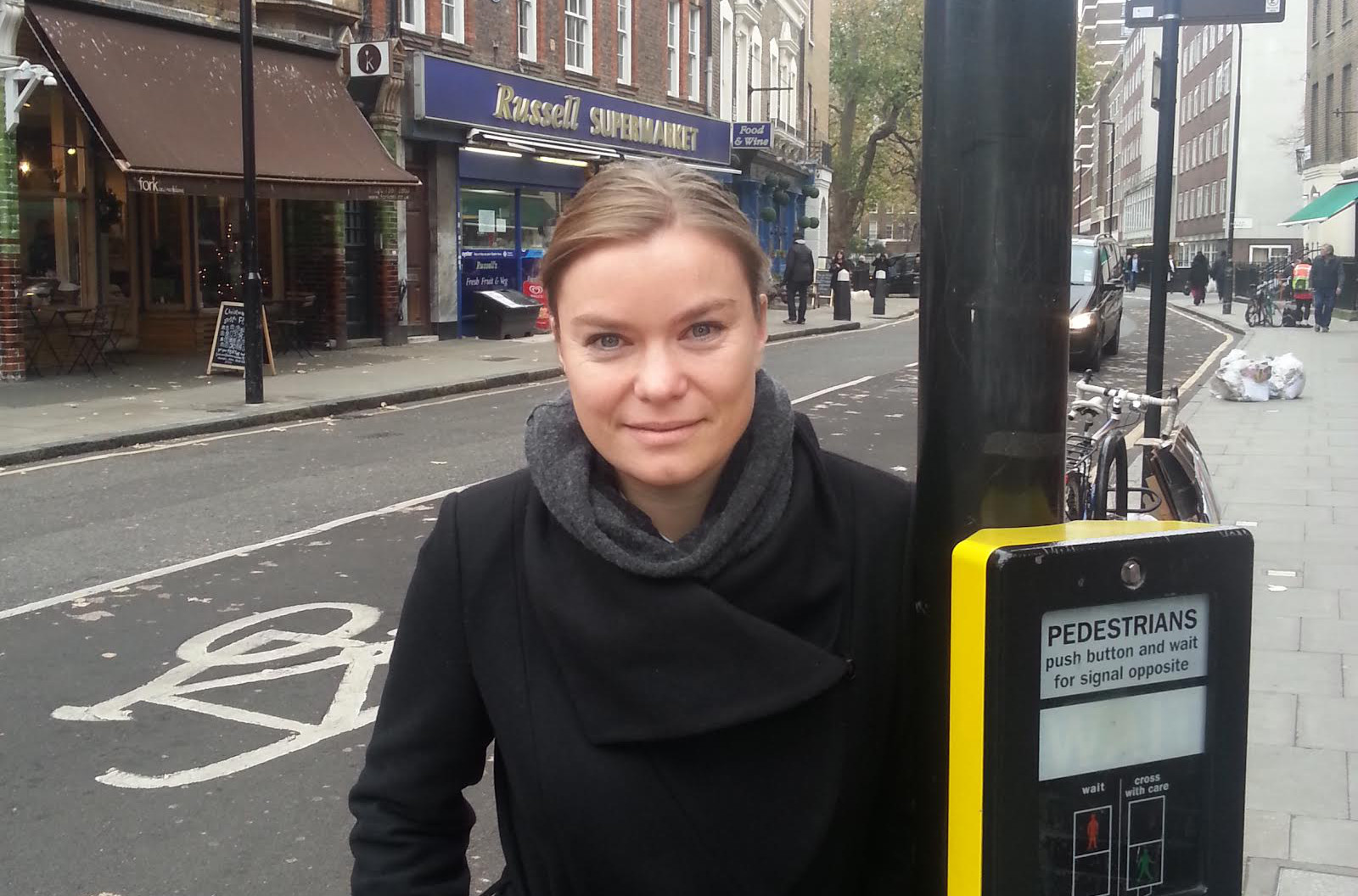
It has been six months since Ingvild Almås received the Nils Klim Prize in her hometown of Bergen. She travels to London every three weeks for several research projects at UCL and the Institute for Fiscal Studies.
The Holberg Prize met with Ingvild Almås in London to talk about her research, balancing family life with an academic career, the differences between British and Norwegian academia, and what it was like to receive the Nils Klim Prize.
Can you tell us how you experience Norwegian and British academic culture?
The pace is probably much faster at the leading universities here in London. I am affiliated with both the University of Oxford and UCL, and I have noticed that the academic communities here are much larger than back home. Competition is fierce, and that attracts outstanding academics from all over the world. The university I am at here also has more funding, which creates opportunities to develop and work on larger research projects.
That said, I have also noticed a change of pace back home in Norway. At NHH, things have changed noticeably: people work more, publish more, and spend more time abroad on research visits. At times, I also get the sense that things are really “heating up” back home. Both England and the United States have prominent elite universities, and you can see that in the large concentration of leading researchers at these institutions. It seems as though society as a whole is organised differently around work. Back home, the working day is more regulated; in London, people work more and their days are noticeably longer. They might go home in the afternoon for dinner, but return to the office in the evening to carry on working.
London is an international city. For example, I work with French, Italian, Portuguese and Canadian colleagues, as well as one Brit. If I worked somewhere like Bristol, I think it would be different: I would probably meet more British people and encounter more of British culture. Back home in Norway, I mostly work with Norwegians. Scandinavians are considered less mobile, although it must be said that this is beginning to change. We are getting out into the world more for sabbaticals and conferences, and more non-Norwegians are being hired at our institutions.
What has it been like to be a woman and a mother of young children while pursuing an academic career?
First of all, I want to say that becoming a mother was wonderful! It has given me many new and lovely experiences. I was surprised by how much is possible with a child. But it is busy, of course, and my husband and I have to organise our time very differently. I have been fortunate to have a strong support network around me, including my husband, my mother and the rest of my extended family. I am grateful for that.
In Norway, everything is so well set up to make it possible to have children and continue your career at the same time. I have always been deeply committed to my field and my research, and I was back at the office ten days after giving birth, with my baby daughter with me. She slept while I worked! I am very aware that this does not suit everyone, but for me it was really good to return to work so quickly. My workplace, NHH, was very flexible and made all the necessary arrangements so I could work during this period. I had a sofa in my office where I could nurse my little daughter, and I could come and go as I pleased, without duties or teaching.
When my daughter was about six months old, the family moved to London, where we lived for six months. My mother came along and looked after my daughter while I worked. My husband travelled between Bergen and London for his job. It is less common for mothers to work in London than it is back home in Norway. It seems that people have children later, after completing their education and much of their career. Women in London need to earn more for it to be worthwhile to return to work, since nannies and childcare are very expensive. In Norway, more people have children while they are still studying, and the system is set up to help them manage both. Still, for me, it was good to finish my doctoral thesis and do some research before having children.
You received the Nils Klim Prize in June 2013. What kind of response have you had, and what has the prize meant to you?
Receiving the Nils Klim Prize was very inspiring for me, and a recognition of the work I have done. It has not always been easy to explain to family and friends what I have spent so much time on all these years, but I felt that the Nils Klim Prize gave the people around me a glimpse of what I do. I have also received positive feedback from colleagues at NHH and in London. There is little “Law of Jante” at NHH: everyone who receives an award or does good work is celebrated and recognised.
I find it quite amusing, and wanted to mention, that my colleagues in London were surprised that I took part in symposia, award ceremonies and dinners lasting several days. They remarked that Norwegians enjoy formal dinners and speeches. For me, receiving an interdisciplinary prize was especially inspiring. I take it to mean that the work my research group, The Choice Lab at NHH, and I do is also of interest to people outside economics. One of our goals has been both to communicate with other disciplines and to write articles that economists and others can find interesting and important. Among other things, we have regularly organised conferences with philosophers, neuroscientists, biologists and sociologists; published a number of articles in interdisciplinary journals; and written regularly for the media and Norwegian subject-specific magazines.
Sist endret:
Publisert:
Ingvild Almås
The 2013 Nils Klim Prize was awarded to Norwegian economist Ingvild Almås (b. 1978).
Almås’s research focuses on economic inequality. She earned her PhD at the Norwegian School of Economics, and during her studies also attended prestigious universities such as Oxford, Yale and Princeton. She is currently an adjunct professor at the Department of Economics at the Norwegian School of Economics.
Related Content

Ingvild Almås
The Nils Klim Prize for 2013 was awarded to the Norwegian economist Ingvild Almås.
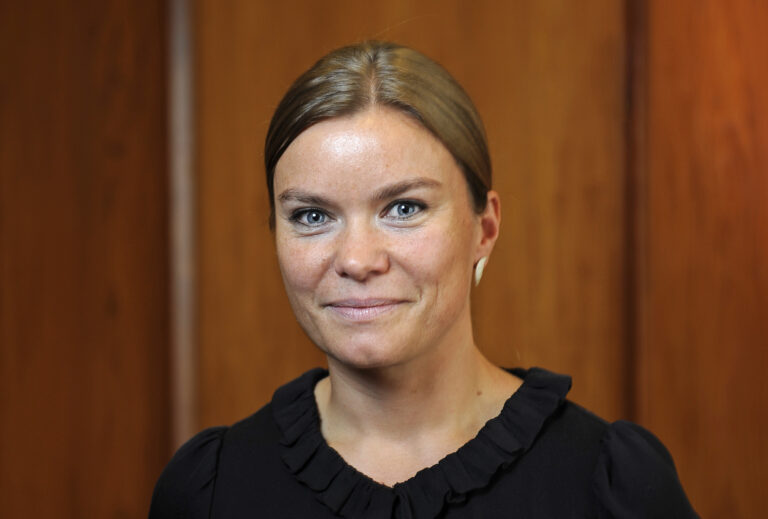
Ingvild Almås awarded the 2013 Nils Klim Prize
The Board of the Ludvig Holberg Memorial Fund has decided to award the 2013 Nils Klim Prize to Norwegian economist Ingvild Almås. The Prize amount is NOK 250,000 (EUR 34,000/USD 43,000).
Interview with 2013 Nils Klim Laureate Ingvild Almås
Interview with the 2013 Nils Klim Laureate Ingvild Almås.