


You are a young researcher with an extensive bibliography. Which topic in your research do you consider most important?
There are two topics that I consider important and where I feel my contributions have made a difference. First, I have researched global inequality and poverty, focusing on how to compare incomes across countries and on the errors in traditional methods used by organisations such as the World Bank and the UN. I have proposed an approach based on the observed choices of individuals and households. I find that traditional methods based on more aggregated figures contain substantial errors, particularly for poor countries. The poorer a country is, the more traditional methods appear to overestimate its income. In other words, I identify a systematic effect that leads measures of global inequality by the World Bank and the UN, for example, to underestimate it.
Second, I have worked on normative questions related to income inequality, together with researchers at The Choice Lab at NHH. Our work addresses questions at the intersection of economics and philosophy that are also fundamental to economic policy, such as: “Which inequalities do people consider fair?”, “What shapes our views about fairness?” and “How fair is the distribution of income in Norway?” Among other things, this research shows that people’s views about fairness change dramatically during adolescence, reflecting the institutional changes young people experience. Another important point in this part of my research is that income inequality and unfairness are distinct. We have shown that although income inequality in Norway has declined slightly over the past few decades, society appears to have become less fair.
My main focus is income inequality and how to understand and measure it correctly. I work along two dimensions. The first is identifying and measuring global inequality and poverty. I do this by identifying actual income through the observed behaviour of individuals and households. Among other things, I use the composition of calorie intake, food budget shares and self-reported poverty to identify and verify results.
How would you define your current intellectual project?
To find out what has happened to global inequality in recent years, it is crucial to obtain a good measure of the incomes of people in China and India. Substantial poverty reduction in these countries is also necessary to achieve the Millennium Development Goal of reducing poverty. These countries have been a major focus of my research. My preliminary results suggest that we overestimate China’s overall income level and the extent of poverty reduction in both China and India. The World Bank revised China’s income downward by 40 per cent in 2007, but my results in the article “International Income Inequality: Measuring PPP Bias by Estimating Engel Curves for Food” suggest that the income may be even lower. Work with my co-authors Johnsen (University of Stavanger), Kjelsrud (University of Oslo) and Somanathan (Delhi School of Economics) also suggests that poverty is greater in both China and India than the official figures indicate.
I also work on developing methods to measure global inequality. With my co-author Sørensen (NHH), I have developed a measurement method that takes account of how people at different income levels consume different combinations of goods. For example, poorer households spend a larger share of their income on food than wealthier households do. I am also continuing to develop methods for measuring global inequality with co-authors at, among other institutions, Oxford, Minnesota and Cambridge.
The second dimension of my research is more micro-based and focuses on income inequality in general, and between men and women in particular. The Choice Lab at NHH has completed the first part of a major research project in which we studied Norwegian 15-year-olds and measured their competitiveness and risk-taking in an economic setting. We also measured their patience, time use, personality, generosity and views on fairness. A key aim of this project is to study how these individual characteristics are associated with the career choices they make later in life. This work, along with research on the more normative aspects of income inequality and fairness, is being carried out with Choice Lab researchers including Cappelen, Salvanes, Sørensen and Tungodden. I also work with researchers at Bristol, BI and the University of Oslo on projects related to income inequality between men and women.
What role do you think the social sciences should play in the 21st century?
To make good choices for society—whether reforming Norwegian schools, designing Norway’s tax system or developing transfers, for example from the World Bank to poor countries or within the EU—decisions need to be based on knowledge of the facts. Before introducing a new reform, such as one in Norwegian schools, we need to assess the effects of previous reforms and understand what creates differences in school and later in life, as well as what leads to good outcomes. The social sciences have an important role to play in this debate, particularly by identifying and quantifying causal relationships that can inform politicians and other decision-makers. A wealthy country like Norway can afford to create good shared solutions, and should therefore also be able to fund the research that enables us to put them into practice. Informed by knowledge, politicians and Norway’s democracy can choose effective and fair solutions.
What is your view of research prizes such as the Nils Klim Prize?
The prize is a great source of inspiration for me. I think prizes like this are important in general, but motivating young researchers is especially important. Research often feels like hard work, and you have to engage with other critical researchers, whose scrutiny is necessary to ensure high-quality work. We also spend a fair amount of time working alone and sometimes have to fight to secure funding for our projects. It is encouraging to receive recognition that what you have done so far is good enough.
Sist endret:
Publisert:
Fakta
Nils Klim-prisen 2013 ble tildelt den norske økonomen Ingvild Almås (f. 1978).
Almås sitt forskningsfokus ligger på økonomisk ulikhet.
Hun tok sin Ph.D. på Norges Handelshøyskole, men har i løpet av sitt utdanningsløp vært innom prestisjefylte skoler som Oxford, Yale og Princeton. I dag er hun Professor II på institutt for samfunnsøkonomi ved Norges Handelshøyskole.
Related content

Ingvild Almås
The Nils Klim Prize for 2013 was awarded to the Norwegian economist Ingvild Almås.
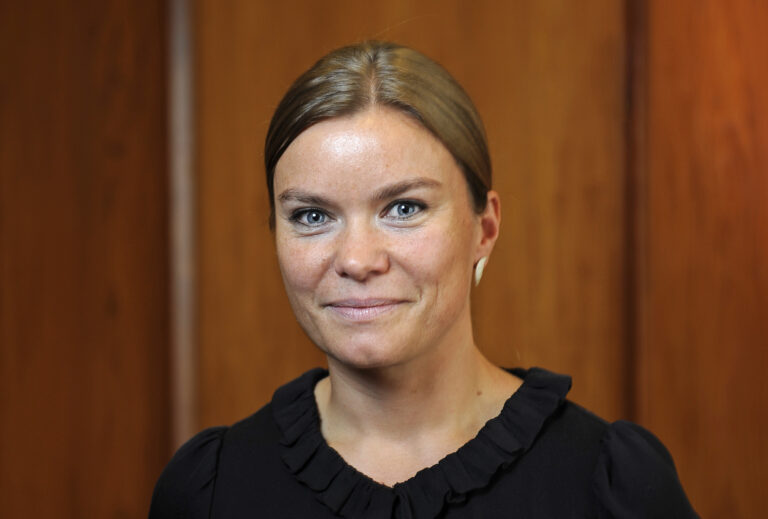
Ingvild Almås awarded the 2013 Nils Klim Prize
The Board of the Ludvig Holberg Memorial Fund has decided to award the 2013 Nils Klim Prize to Norwegian economist Ingvild Almås. The Prize amount is NOK 250,000 (EUR 34,000/USD 43,000).
Research Career between Bergen and London
It has been six months since Ingvild Almås received the Nils Klim Prize in her hometown of Bergen. She travels to London every three weeks for several research projects at UCL and the Institute for Fiscal Studies.